Death, dying and the pursuit of control

Victoria’s landmark Voluntary Assisted Dying laws are now in force and, for most Victorians, won’t mean a thing.

They will probably never use them or know anybody who does, for the eligibility criteria is so narrow.

But for the unlucky few who will eventually exercise their rights under these new laws, they mean an awful lot.

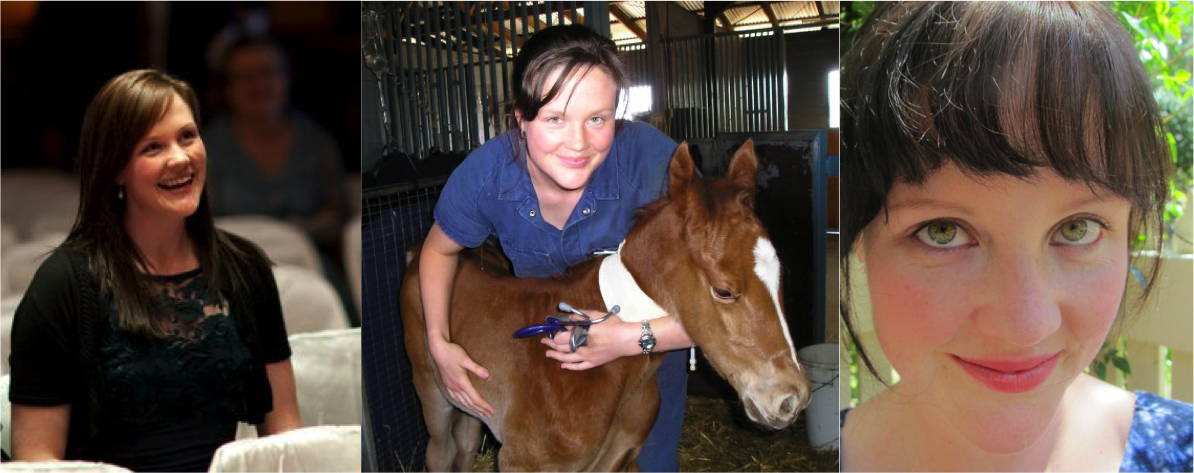
My sister Kate had almost everything: intelligence, humour, compassion, a thirst for adventure, a love of animals, art and music.

The one thing she didn’t have was time.

Cancer changed all that. Osteosarcoma, to be exact. The most common type of bone cancer.

Kate died a few years ago. She is my big sister, but at 36 I’m now older than she ever was.
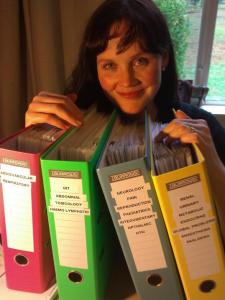
Kate and her study notes for veterinary science exams at Melbourne University.

Kate was a science student and, later, a veterinary surgeon. Early on, one of her doctors offered her a choice: “Do you want us to treat you as a medical professional, or not?”

That is, did she want them to distill her diagnosis and treatment options into layman’s terms, or communicate absolutely everything: all the scientific detail and nerdy medical complexity?

She chose to know as much as possible. It allowed her to reclaim a small amount of power and control.

When you’re fighting for your life and, later, preparing for your death, you grasp at any power and control you can.

Years later, Kate’s family and friends raised funds to help with the cost of medical treatment and to send Kate and her husband on the “holiday of a lifetime”.

We asked for donations, held a big trivia night and auctioned off items donated by local businesses.

(She probably won’t remember, but Victorian Attorney-General Jill Hennessy—then an opposition MP and now one of the senior government ministers charged with overseeing these new reforms—kindly donated a voucher for High Tea at the Victorian Parliament.)

Thousands of dollars were raised, and we were so thankful for the immense generosity of those who contributed.

But I detail this at length mainly to reflect on the futility of it all.

We gave my sister distractions, adventures and comforts because that was all we could give her.

What she wanted originally, a healthy life, the cancer robbed from her.

And what she wanted at the very end, a good death, the state denied to her.
My sister knew the end was coming.

She made a kind of peace with it, as much as I suspect anybody truly can.

She managed to say goodbye to almost everybody she loved and this gives me great comfort.

But, when the time came, Kate’s death was lonely. It was even more tragic than it needed to be.

She exercised the only power and control she had left.

Nothing was going to make my sister well again. But I will forever wonder how much better her death would have been if her family and friends had been there to hold her hand.

If my sister was alive today she would be applauding these new laws and thanking those who have campaigned so tirelessly to see them realised.

There are legitimate debates to be had about safeguards and implementation. But for those who oppose Voluntary Assisted Dying outright I have only envy and pity.

I envy anybody who hasn’t had a loved one so sick that they longed for the simple salvation of death, only to be denied this basic dignity.

And I pity anybody who has endured this awful experience, but still wishes to deny people the right to die in a manner and at a time of their choosing.   ■

Thanks for reading to the end. I heartily recommend this beautiful piece Kate’s good friend Dougie McGuire wrote on ABC Open just months before her death.

“We argued about everything over long boozy dinners, politics particularly, Irish matters especially and raged about the big things that really don’t matter, safe that our friendship was strong enough to be strengthened by the many small acts which do.”


Duncan – Issues vs Distractions

“I’ve got a disability and a low education, that means I’ve spent my whole life working for minimum wage. You’re gonna lift the tax-free threshold for rich people … Rich people don’t even notice their tax-free threshold lift. Why don’t I get it? Why do they get it?”

Victorian man Duncan Storrar asked this question on the political debate TV show Q&A soon after the launch of the 2016 Australian election campaign. Soon after, his life was turned upside down. Before long the country’s most read newspaper declared him a “villain” on its front page.

I don’t plan to relitigate these events here. That’s been done enough elsewhere.

For me, the most disappointing element of this whole saga was how some people, wilfully or otherwise, ‘played the man’ and simply ignored the issues Duncan so bravely tried to put in focus.

I wrote the below statement in my capacity as Media and Communications Manager at VCOSS.

There has never been a more dangerous time to be an Australian. Just ask Duncan Storrar.

We now live in an age where simply having the temerity to ask a Government MP a question about tax relief makes you fair game for public ridicule. After his appearance on Q&A, some have elevated Duncan to the status of a national hero. But Duncan didn’t ask for that. Others have sought to tear Duncan down. He certainly didn’t ask for that.

They say never to pick a fight with somebody who buys ink by the barrel. And that may be true. But all Duncan did was ask a question.

The truth is this isn’t about any individual. A federal election is upon us and every minute we spend debating whether or not Duncan is a good bloke is a wasted minute.

Its 60 seconds we’re not discussing the future of fairness in our country or how to make our tax system more equitable.

Instead of dissecting Duncan’s life, we could be discussing how in Victoria alone we currently have more than 650,000 people living in poverty. We could be musing on the fact that, of these, almost one third are earning a wage but it’s just not enough to pay the bills.

We could be outraged that 22,000 people are homeless in Victoria

We could be discussing how entrenched social disadvantage is mighty difficult to fix, because social problems are complex, with multiple, interrelated causes.

And, specifically, we could be discussing proposed changes to Australia’s tax regime. And how such changes might affect those who are doing it tough.

So why don’t we focus on the issues? That is what Duncan asked for.

(This post originally appeared on VCOSS’s Facebook page.)

In defence of Days of Thunder

In defence of Days of Thunder (1990)

On Saturday, when all the chores and errands were done, I had an urge.

Days of Thunder was calling my name. I wanted to get out there and hit the pace car.

Earlier in the month, I’d watched a TV news story about drag racer Phil Lamattina who had survived a horror crash and has now quit racing.

Days of Thunder had been floating around in my subconscious ever since.

It was a film on high rotation during my childhood. Mum had taped it off the telly on VHS and my brother and I quickly embraced it. Phrases like “I’m dropping the hammer!” became common in our home. We’d ‘slipstream’ on our bikes.

For those unfamiliar with the text, IMDb says Days of Thunder is about “a young hot-shot stock car driver [who] gets his chance to compete at the top level”.

Even I think that sounds shit.

The film has long been derided as ‘Top Gun on wheels’, full of two dimensional characters and wooden dialogue. Insert your phrase of condemnation here (though, be warned, they’ve all been used before…)

Should I even revisit this film? Or was it best left in my childhood?

With some trepidation, I decided to show some faith and rewatch Days of Thunder. 

I wasn’t expecting a masterpiece, but among the extended action sequences, perfunctory character development (and, it must be said, an uncondemned instance of what’d we’d now call sexual assault*) what I encountered was a pleasant surprise.

Indeed, in retrospect, the film even acted as a petrol splattered Trojan Horse for a few pretty valuable life lessons:

1) Real heroes admit their flaws.
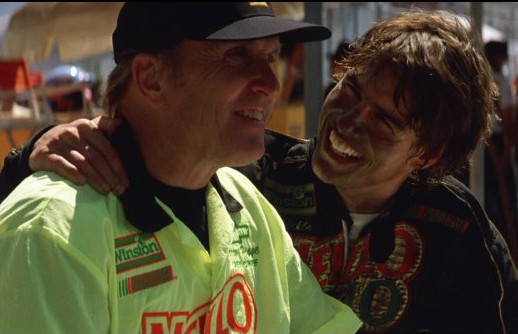
The Days of Thunder plot setup hinges on a single moment where arrogant and supremely talented race car driver Cole Trickle (Tom Cruise) admits to industry veteran Harry Hogge (Robert Duvall) that he’s in over his head.

Cruise-Duvall“I don’t know a lot about cars,” Trickle says in hushed tones in a blokey bar. “I’d like to help out but I can’t. I’m an idiot. I don’t have the vocabulary.”

In the context of the film, this is a massive and embarrassing confession. The movie’s prototype hotshot driver (“There’s nothing I can’t do in a race car”) is admitting he’s oversold himself and is begging for help from a man he hardly knows, but whose reputation he obviously respects.

Admitting your flaws? Respecting your elders? Asking for help? You wouldn’t find many other ‘action heroes’ embarking on such a conversation.

Cruise and Duvall’s characters quickly slot into the protégée/mentor dynamic and success soon beckons.

2) Men, talk to your mates about their health.
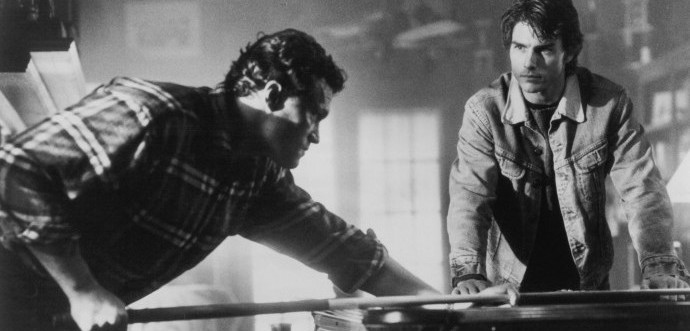
When Trickle and the film’s early villain, the perfectly named Rowdy Burns, are involved in a serious crash, the two adversaries soon develop a fractious friendship. Rowdy suffers a subtle but debilitating brain injury from the smash and ends up hiding away in his country retreat popping painkillers.

Burns makes it very clear he doesn’t like hospitals or doctors—especially female ones—and has no intention of engaging with the medical system. Sound like any men you know? Pressure is put on Trickle to go “talk to Rowdy” and convince him to get treatment.

Eventually, he does.

Cole Trickle: What’d you win this one for? This one right here? What’d you win this for? [Points to a big trophy in Burns’ room.]

Rowdy Burns: Doesn’t it say?

Cole Trickle: Yeah, that’s a Winston Cup, buddy. Hell, that’s an easy one to forget. What’s your name, or has that slipped your mind too?

Rowdy Burns: Screw you, man.

The dialogue is hardly Sorkin-esque, but the conversation is nonetheless tense and layered. Neither man wants to be there. Cole doesn’t want to be probing his new friend’s health woes (and reminding himself of his own mortality), and Rowdy doesn’t want him there putting pressure on him. Frankly, it’s a conversation men never enjoy.

But the scene happens (below). Rowdy goes to the hospital and agrees to have minor brain surgery. Their friendship is elevated to a new level. The lessons are that real mates talk to each other about their health and that awkward conversations are sometimes necessary. If more men had learnt this lesson in teenagehood the world would be a better place.

days-of-thunder

3) “I’m more afraid of being nothing than I am of being hurt”
Cruise’s character delivers this memorable line in the buildup to the movie’s final race sequence at the Daytona 500, “the Super Bowl of stock car racing”, which he, of course, wins.

On face value it’s a statement of recklessness and hubris. But, in the context of the film, this somewhat cheesy line is a declaration of genuine self-belief.

Coming at such a crucial moment in the film, it’s also instructive in understanding Trickle’s wider character arc. It’s the sentiment of a young man who’s respectfully learned at the foot of his mentor, honestly contemplated the risks of his own profession through watching the suffering of his mate Rowdy and—weighing up the dangers—has made a calculated decision to pursue his goals.

The lesson here needs little decoding. It’s okay to dream big and even take risks to achieve your goals.

Days of Thunder isn’t a work of genius. It’s closer to good than great, but it certainly doesn’t deserve the trash reputation it’s developed over the past 25 years. Which is why I felt compelled to pen this defence.

If you love a brainless action sequence then please watch Days of Thunder immediately.

But, equally, if you look beyond the fast cars and slick race scenes, and ignore the now-cliche Tom Cruise smirk, you might just find a film with equal parts heart and horsepower.


*- This is a big asterisk. The scene referenced involves Cruise’s character grabbing his female doctor’s hand and shoving it on his crotch, because he mistakenly believes she’s a prostitute wearing a medical costume. The incident becomes a source of embarrassment for Trickle and his mentor Hogge, who later apologises to the doctor (played by Nicole Kidman). Interestingly, she doesn’t really condemn his act and actually enters into a relationship with him. This film’s views on acceptable sexual behaviour is dated, to say the very least.

How did the Right lose ownership of marriage?

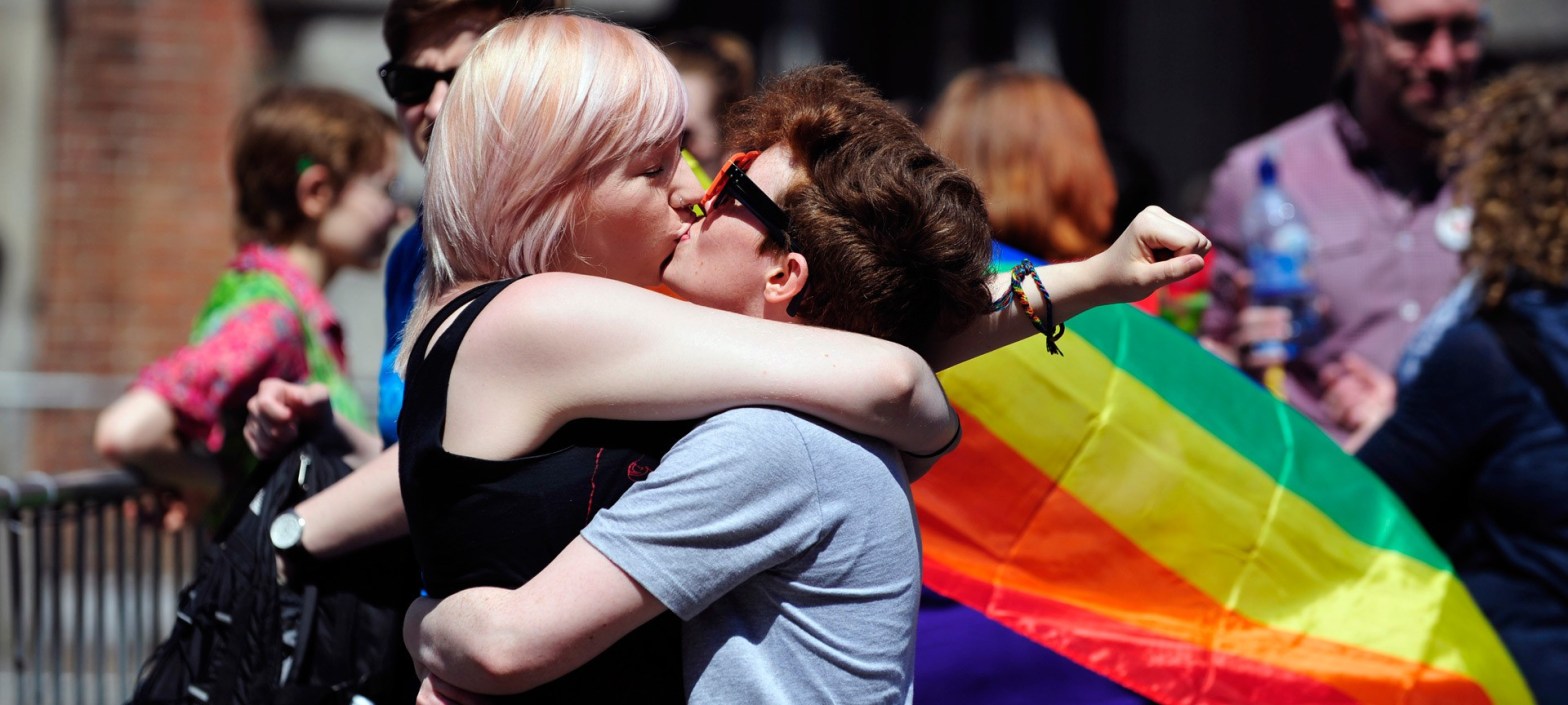
Look around the world and you’d be forgiven for thinking marriage equality, gay marriage, equal marriage (whatever you want to call it) is a progressive notion.

Calls for reform are often heard from the so-called Left: greens, students, academics and connoisseurs of cold drip coffee served in moody laneways. It’s easy to forget marriage is intrinsically conservative.

david
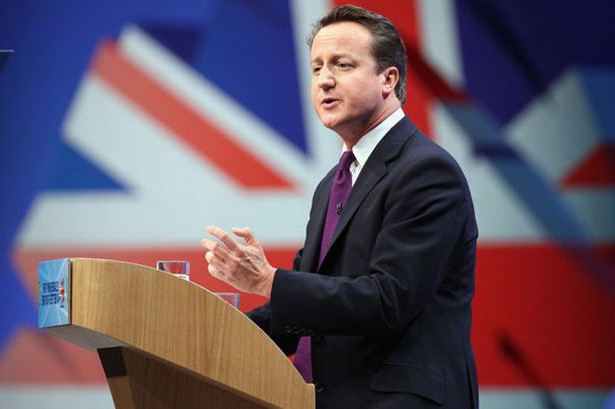
Britian’s conservative PM David Cameron
When British Prime Minister David Cameron addressed the Tory faithful in 2011, he said this:

“Conservatives believe in the ties that bind us; that society is stronger when we make vows to each other and support each other. So I don’t support gay marriage despite being a Conservative. I support gay marriage because I’m a Conservative.”

His speech, widely reported at the time, put marriage equality firmly in the conservative tent. Cameron went on to emphasise marriage wasn’t just a piece of paper, but something that “pulls couples together through the ebb and flow of life [and] gives children stability”.

The most progressive thing anybody can do—be they gay, straight or otherwise—is to live away from the shackles and trappings of marriage. Marriage is, after all, an institution historically associated with property deals, military alliances, dowries, arranged unions, the general oppression of women and, more recently, soaring divorce rates. FTW.

(As a married man strongly in favour of reform, I’m not suggesting people give up on marriage equality. But, strictly speaking, that would be the most progressive thing to do.)

This perspective is hardly new.

“When I went to university [in the 1980’s] we weren’t talking about gay marriage,” former Labor Prime Minister Julia Gillard said in 2013, shortly after losing office. “As women, as feminists, we were critiquing marriage.”

Oh how the debate has flipped. Now progressives push for couples to declare their union under the banner of marriage, and conservatives demand couples live outside its bounds. The Conservatives have won! But they now don’t want the victory.

abbo
Conservative Senator Eric Abetz and the Prime Minister, Tony Abbott, both oppose marriage equality.
Which brings us to the politics of all this. New Zealand, Britain, Ireland and the US have all embraced gay marriage, and the sky hasn’t fallen in. Everybody (well almost everybody) accepts it’s inevitable in Australia too. Given this, the Right is cruising for a massive defeat.

With ever hysterical attack on gays and lesbians, their love, their sex lives and their ability to raise kids (arguments all purportedly mounted in defence of the institution of marriage) conservatives are digging a massive, wrong-side-of-history sized hole for themselves.

It simply doesn’t have to be this way. The Right should start framing marriage equality as the conservative victory it will be. It’s not too late to snatch a political victory from the jaws of defeat.

Along the way, and with the correct leadership, we might just build some consensus, heal some wounds and make a better Australia. Anything less would be a missed opportunity.

-RS

(Feature image: Reuters.)

My Pa ‘bullshitting’ Ray Martin on national TV (1992)

As a celebrated bullshit artist, it’s really no surprise my charismatic grandfather Laurie Sheales ending up on national TV in May 1992 telling Ray Martin one of his tallest tales.

My 87 year old and gloriously hirsute Pa was sitting in a pub one night, swilling beer and telling those assembled how he’d been completely bald as a younger man, but how he’d managed to turn things around by applying cow manure to his hairless head.

A producer for Midday just happened to overhear this tale and invite Laurie into the studio to retell his story, and give a live demonstration.

The result is a piece of Sheales family folklore. We particularly love how the old fella kept his hands firmly behind his back the whole time and — after a tentative start — even began cracking his own jokes.

By the end it was The Laurie Sheales Show.

I hope you enjoy it.

Did the promise of pudding swing the Victorian election?

THE internet engaged in a collective ‘isn’t he adorable’ a few months back when it transpired actor Benedict Cumberbatch couldn’t say the word “penguins”. You can watch the video here.

B3o3twUIUAMYxp9(The fact Cumberbatch had just lent his voice to a nature documentary about penguins — or “pengwings” — and is currently starring in the Penguins of Madagascar movie made the whole thing even better.)
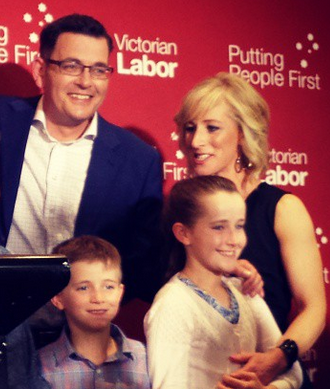
So what does all this have to do with yesterday’s Victorian election, which swept Labor’s Dan(iel) Andrews into the premier’s office?

While conventional wisdom suggests the controversial East West Link and disputes about pay for ambos and firefighters played a key role in Labor’s win, it’s also possible Daniel Andrews flicked the switch to ‘evil genius’ and employed a bit of highly strategic, Cumberbatch-esque linguistic subterfuge in a bid to sway undecided voters.

Stick with me here, and check out this video of the Labor leader promising Victorian voters PUDDING. Yes, as in the moist cake stuff. Moreover, enough pudding to fill Melbourne’s Etihad Stadium.

(Post continues below video)

On the surface Andrews simply can’t say the word “putting”, which is unfortunate given the ALP’s campaign was almost entirely built around the slogan ‘Putting People First’. But let’s not be so naive.

These political catchphrases are debated, dissected and focus group tested before ever being uttered in public.

danWhich means two things have happened. The first is that Labor strategists adopted this slogan in the full knowledge that Andrews couldn’t pronounce a third of it. This seems cruel, odd and somewhat self-defeating.

The second option is that the ALP’s savvy election strategists devised this particular collection of syllables in the hope some voters would be subliminally swayed by the promise of baked goods.

It’s so crazy it might just be true.

(H/T Daniel Bowen.)

Even Republicans can enjoy the royals

This article first appeared in The Sydney Morning Herald.

Image

I HAVE some advice for all those rabid supporters of an Australian republic. The most productive thing you can do when the Duke and Duchess of Cambridge visit Australia in April is simple: take off your grumpy pants and get on board.

That’s right, you heard me.

Get excited, engage in those workplace water-cooler discussions about where the royal duo might visit, perhaps even buy one of those glossy magazines with a cut-out itinerary.

Because whether you like it or not, ”Kate and Wills” are popular. And rolling your eyes when somebody expresses excitement about the royal visit isn’t going to change that. Quite the opposite, it’s likely to switch people off to your arguments.

Being snarky is rarely an effective tool of persuasion.

Instead, Australian republicans (and I’m one of them) need to send the message that it’s OK to like the royals and not want them as our head of state.

Having an opinion on Brad and Angelina’s growing brood or keeping up with the Kardashians isn’t incompatible with wanting a republic, so why should royal-watching be?

My Republican wife and sister-in-law were glued to TV coverage of the 2011 royal wedding.

After the failure of the 1999 republic referendum the (then) High Court Judge Michael Kirby delivered a speech in London on the ”10 lessons” Australians should take from the experience. They’re worth revisiting.

Kirby said labelling opponents of the referendum proposal ”un-Australian” was ”a sure way to alienate them”. He noted how the Queen’s ”admirable personal qualities continue to attract a vital cohort of support to the negative case” (an argument which now applies equally to Kate and William).

Kirby also chastised the media for having ”showed the Queen and her supporters in a bad light”.

The lesson is clear, Australians who dream of a republic need to stop denigrating those with an affection for the royal family. It’s counterproductive and, what’s more, the royals aren’t going anywhere.

If an Australian admires the Queen’s grace, stoicism or colourful array of hats, they’ll continue to do so under a republic. And a directly elected Australian prime minister would be powerless to quell demand for pictures of young Prince George or his party-boy uncle.

American science fiction writer Robert Heinlein once wrote: ”Never try to teach a pig to sing; it wastes your time and it annoys the pig.”

The same could be said of attempts to shame Australians into disliking the royal family. It just won’t work.

Australian republicans need to accept that Kate, Will, Chuck, Harry and Lizzie do belong in our magazines and gossip sites, and refocus their arguments to why they don’t belong in our constitution.

‘Human rights’ built on a bedrock of shame

When a troublesome child is chastised for bad behaviour they’re often quick to point the finger at somebody else, as if that other child’s wrongdoing might somehow lessen their own guilt.

New research suggests this very natural ‘Look! Over there!’ impulse — enacted on an international scale in the 1970s — might have spurred enthusiasm for what we now call “human rights”.

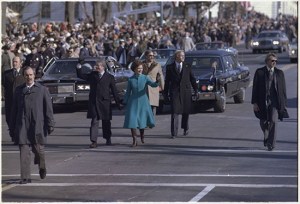
The election of Democrat Jimmy Carter proved a watershed moment for human rights. (Courtesy: National Archives and Records Administration.)

Melbourne historian Dr Barbara Keys argues human rights are today’s moral lingua franca – the universal language in which we couch our aspirations for human betterment.

“Though they can seem like a timeless truth, it was not until the 1970s that ‘human rights’ became a household term and a global rallying cry,” she says.

Dr Keys’ new book Reclaiming American Virtue: The Human Rights Revolution of the 1970s seeks to identify the impulse at the core of this “new moralism”.

Surprisingly, it locates the roots of the modern human rights movement in Americans’ traumatised psychological state after the Vietnam War.

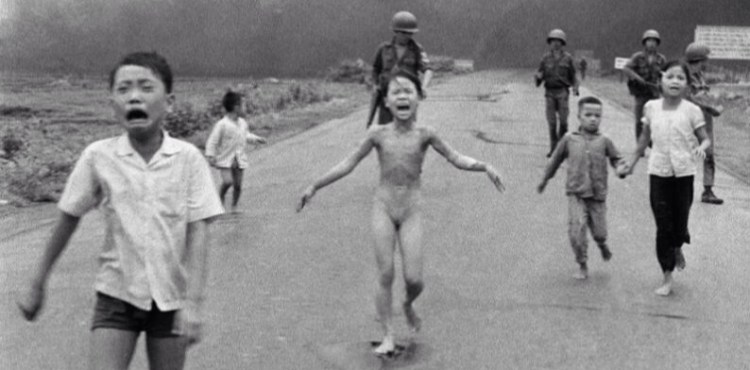
“It is hard to overstate how deeply unsettling the war was for Americans, whose faith in their country’s benevolence was profoundly shaken by the war’s extraordinary brutality,” she says.

“Martin Luther King Jr. famously called the United States ‘the greatest purveyor of violence in the world’ and many observers around the globe agreed. At home, liberals in particular felt ashamed and guilty.

“The desire to assuage these feelings – not to atone for them but to sublimate them – led liberals to embrace human rights.”

Which bring us back to that naughty young child dobbing in a friend.

Dr Keys argues increasing moves by the US to shine a light on the wrongdoing of other nations may have been less about actually preventing atrocities, and more about creating a distraction from America’s own sense of national shame.

“As I see it, promoting international human rights was not a ‘natural’ response triggered by an epidemic of human rights abuses, or by a cool-headed rethinking of Cold War anti-communism.

“Instead it was a kind of sleight-of-hand, whereby Americans turned the spotlight away from America’s own recent history of violence to focus instead on brutal torture by nasty dictators in places like Chile and South Korea.

“Instead of reckoning with their own guilt, Americans made themselves feel better by pointing the finger at others.”

image

At the same time, however, another dynamic was at work. Dr Keys uncovers a largely forgotten conservative strand of human rights promotion, one that sowed the seeds for the neoconservative enthusiasm for human rights and democratisation that defined the George W. Bush era.

Indeed, it was the men and women who would don the neoconservative label a few years later who first introduced international human rights into mainstream American political vocabulary in the early 1970s.

“These conservatives found liberal guilt enraging. They rejected any effort to blame the United States,” Dr Keys notes.

“They grasped human rights as a tool to criticise the Soviet Union, and in particular to press for greater levels of Soviet Jewish emigration. Human rights was useful to conservatives because the concept restored moral stature to the United States and placed opprobrium squarely on the Soviet Union – effectively righting the moral balance that had been upset by the Vietnam War.”

Jimmy Carter, when he became president in 1977, made international human rights promotion one of the central pillars of U.S. foreign policy. His advisers told him human rights appealed to both liberals and conservatives, and could help heal the psychological damage the war had caused.

But Dr Keys believes Carter failed to reckon with the irreconcilable divergence between liberal and conservative visions of human rights, which prioritised very different rights and were aimed at very different targets.

“Though the new policy was hobbled by unresolved contradictions, including the tension between liberal and conservative visions of what human rights were, Carter gave the new mantra the full backing of a superpower and thereby almost single-handedly ensured the rise of human rights to its current status in the global moral imagination,” Dr Keys says.

Her explanation for the rise of human rights makes the arc of US foreign policy sentiment since the end of the Vietnam War more understandable.

Meantime, the liberal version of human rights similarly derived from a failure to reckon with the true costs of American interventionism in Vietnam.

The neocons who would plot the invasion of Iraq after the election of George W. Bush had first embraced the moralism of human rights as a rejection of guilt for the Vietnam War.

Human rights made renewed interventionism more thinkable, not less – which is why so many liberals could end up supporting Bush’s war for human rights.

sorryasylumseekers.com

AKA Why I started sorryasylumseekers.com

There is a serious debate to be had in Australia about asylum seeker policy.

Millions of people flee persecution every year, and their passage from danger to safety needs to be regulated. Most people agree with this, even if their views on exactly how  then to manage the issue differ.

Hence the debate that’s currently raging across our nation’s homes, pubs and halls of power.

Valid questions are being asked in this debate.

How many asylum seekers can Australia sustainably accommodate? How should we, as a nation, deter/manage/encourage asylum seekers? Is ‘stopping the boats’ Australia’s only policy objective? Is mandatory detention a useful policy measure?  Etc etc

These are complex issues worthy of detailed examination.

However, my website sorryasylumseekers.com wasn’t established for that purpose.

Instead, sorryasylumseekers.com is based on a philosophy that Australia’s asylum seeker policy debate — while worthy and necessary — should take place on a bedrock of humanity.

Whatever your views on the Pacific, Malaysia or PNG solutions, surely we can all agree that basic human decency is a worthy objective?

However you assess Australia’s obligations under international law, surely we can all agree that as a rich country we should treat those in our care with respect?

The website is about saying sorry for harsh or inhumane treatment, which is entirely avoidable.

I want compassion for those fleeing persecution as an agreed starting point, something considered sacrosanct by all Australians. Only then can we  have a mature and fruitful debate about real-world policy solutions.

Australia’s asylum seeker policy debate — while worthy and necessary — should take place on a bedrock of humanity.

The public response to sorryasylumseekers.com has been overwhelming. We have contributions from every state and territory, as well as Australians living overseas. Dogs, cats and babies have also featured in people’s posts.

The website has been written up on The BBC WorldBuzzFeed, Al Jazeera, The New Daily, The Guardian, SBS and News.com.

But let’s be frank here — a few feel-good pictures aren’t going to change the world.

However, at the very least, I want asylum seekers to know that not all Australians are lacking in compassion.

There are people with big hearts all across the country (and of all political persuasions).

sorryasylumseekers.com may not achieve anything.

It may raise some awareness, it may eventually raise some money, or it may make just one person fleeing persecution feel more welcome in Australia.

But it’s better than doing nothing.

The troublesome truth about politics

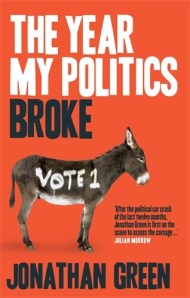
This review of Jonathan Green’s The Year My Politics Broke (Melbourne University Publishing) first appeared in The Voice. 

As a detailed account of how politicians and politicking has veered off course in Australia over recent years The Year My Politics Broke isn’t an enjoyable read. But then, it isn’t meant to be: the book is designed as uncomfortable reading.

That veteran journalist Jonathan Green has managed to make it engaging at all is a real triumph.

imageEarly on in the book Green – the presenter of Radio National’s Sunday Extra and former editor of the ABC’s analysis website The Drum – states it is neither a diary nor campaign notebook, but instead “a running reflection of the current state of our politics”.

(The word “our” is crucial, as Green obviously believes all Australians bear some responsibility for the current state of national affairs. And that especially includes him, he says, “a minor league media participant”.)

True to his word, Green does not provide a blow-by-blow account of contemporary Labor rule, nor does the book read as yet another critique of Tony Abbott’s ‘just say no’ approach to Opposition. Instead, the book tackles issues thematically.

But the overarching (and most distressing) argument contained in The Year My Politics Broke is that our whole political system is now incapable of constructive action or compromise on the big issues.

“The assumption we make from the outside is that the political system will make a genuine attempt to reach some sort of resolution, to come up with ideas and policy settings that might advance these various courses,” writes Green.

“The troublesome truth,” he goes on, “is that sometimes the establishment of disagreement, the pursuit of a negative line [for its own sake], can have more political reward than sitting down and working the thing out.”

And all this at a time when the nation’s policy challenges – like climate change, tax reform or the treatment of asylum seekers – are only becoming more thorny.

“The challenges facing us today are so multi-dimensional and complex,” former Victorian Governor Alex Chernov told Voice in June.

“They tend to inhibit rather than encourage public discussion and the development of policies in relation to them.”

You’d curl up in a ball if it wasn’t all so important.

The only problem with The Year My Politics Broke is that it sometimes felt overly familiar. Green has a beautiful and unique writing style, but I would often read a passage with a distinct sense that I’d read it before (perhaps months ago on The Drum?).

It must be hard to write over a prolonged period of time and then produce a wholly original retrospective on the same topic (especially when you have a unique writing style). Green’s efforts are admirable.

That being said, perhaps the only way to truly do justice to the Rudd—Gillard—Are-We-There-Yet?—Rudd-Again years is to instil in the reader a sense of déjà vu.

The Year My Politics Broke certainly did that. Bravo.